
National Geographic Receives Massive Attention With Their New Cover, And The Harsh Reality Behind It Is Shocking
There’s one thing that truly unites us in this world, and unfortunately, it is not something to be happy about. Everyone around us shamefully affects the earth with our single-use plastic and overall lack of responsibility and love for our planet. Newest National Geographic issue reveals just how truly bad the earth has been affected by our irresponsible consumerism and daily choosing plastic over own mother earth. Their newest campaign called ‘Planet or Plastic’ is aiming to encourage everyone around the world to open their eyes to the tragic condition of our earth.
The campaign has identified such products as plastic bags, bottles, and straws as one of the most problematic aspects of our consumerism and is promoting to drastically reduce their usage by making truly simple choices like choosing reusable bags and straws. These powerful images reveal the shocking reality behind 9 millions tonnes of plastic waste each year, and hopefully, will encourage everyone to think before they use another plastic packaging again.
“For 130 years, National Geographic has documented the stories of our planet, providing audiences around the world with a window into the earth’s breathtaking beauty as well as to the threats it faces,” Gary E. Knell, CEO of National Geographic Partners, told the Daily Mail. “Each and every day, our explorers, researchers and photographers in the field witness firsthand the devastating impact of single-use plastic on our oceans, and the situation is becoming increasingly dire.”
Scroll down below to see the powerful images for yourself, and check out National Geographic’s campaign here , to further educate yourself about this hugely important issue.
The new issue of National Geographic will feature a campaign about plastic waste

It’s clear that every one of us lacks responsibility and love for our planet

“The photographer freed this stork from a plastic bag at a landfill in Spain. One bag can kill more than once: Carcasses decay, but plastic lasts and can choke or trap again”
And the newest National Geographic issue shows just how truly bad the earth has been affected by our daily choices of plastic over our own mother earth

“Under a bridge on a branch of the Buriganga River in Bangladesh, a family removes labels from plastic bottles, sorting green from clear ones to sell to a scrap dealer. Waste pickers here average around $100 a month”
Their newest campaign called ‘Planet or Plastic’ is aiming to encourage everyone around the world to open their eyes to the tragic condition of our earth

“The largest market for plastics today is packaging materials. That trash now accounts for nearly half of all plastic waste generated globally—most of it never gets recycled or incinerated”
The campaign has identified plastic bags, bottles, and straws as problematic products

“Plastic bottles choke the Cibeles fountain, outside city hall in central Madrid. An art collective called Luzinterruptus filled this and two other Madrid fountains with 60,000 discarded bottles last fall as a way of calling attention to the environmental impact of disposable plastics”
These powerful images reveal the shocking reality behind 9 millions tonnes of plastic waste each year

“An old plastic fishing net snares a loggerhead turtle in the Mediterranean off Spain. The turtle could stretch its neck above water to breathe but would have died had the photographer not freed it. “Ghost fishing” by derelict gear is a big threat to sea turtles”
And hopefully, this will encourage everyone to think before they use another plastic packaging again

“On Okinawa, Japan, a hermit crab resorts to a plastic bottle cap to protect its soft abdomen. Beachgoers collect the shells the crabs normally use, and they leave trash behind”
The magazine itself is leading by example, beginning to send out their editions in paper instead of plastic

“To ride currents, seahorses clutch drifting seagrass or other natural debris. In the polluted waters off the Indonesian island of Sumbawa, this seahorse latched onto a plastic cotton swab—“a photo I wish didn’t exist,” says photographer Justin Hofman”

“Around the world, nearly a million plastic beverage bottles are sold every minute”

“Some animals now live in a world of plastics—like these hyenas scavenging at a landfill in Harar, Ethiopia. They listen for garbage trucks and find much of their food in trash”
And it encourages consumers to take a pledge to dramatically reduce their use of them by making simple conscious choices

“Some 700 species of marine animals have been reported so far to have eaten or become entangled in plastic”

Will you take the pledge?

“By 2050, virtually every seabird species on the planet will be eating plastic”

“As of 2015, more than 6.9 billion tons of plastic waste had been generated. Around 9 percent of that was recycled, 12 percent was incinerated, and 79 percent accumulated in landfills or environment”
“For 130 years, National Geographic has documented the stories of our planet, providing audiences around the world with a window into the earth’s breathtaking beauty as well as to the threats it faces”

“Just after dawn in Kalyan, on the outskirts of Mumbai, India, trash pickers looking for plastics begin their daily rounds at the dump, joined by a flock of birds. In the distance, garbage trucks rolling in from the megacity traverse a garbage valley. The woman carrying the red cloth lives at the landfill”

“After sheets of clear plastic trash have been washed in the Buriganga River, in Dhaka, Bangladesh, Noorjahan spreads them out to dry, turning them regularly— while also tending to her son, Momo. The plastic will eventually be sold to a recycler. Less than a fifth of all plastic gets recycled globally”

“Colored chips of plastic—collected, washed, and sorted by hand—dry on the banks of the Buriganga. About 120,000 people work in the informal recycling industry in and around Dhaka, where 18 million inhabitants generate some 11,000 tons of waste a day”

“Recology’s largest San Francisco recycling plant handles 500 to 600 tons daily. One of the few plants in the U.S. that accept shopping bags, it has more than doubled the tonnage it recycles in the past 20 years”
“Each and every day, our explorers, researchers and photographers in the field witness firsthand the devastating impact of single-use plastic on our oceans, and the situation is becoming increasingly dire”

“Trucks full of plastic bottles pull into a recycling facility in Valenzuela, Philippines. The bottles were plucked from the streets of metropolitan Manila by waste pickers, who sell them to scrap dealers, who bring them here. The plastic bottles and caps will be shredded, sold up the recycling chain, and exported”

China is the largest producer of plastic—it accounts for more than a quarter of the global total—much of it exported to the world


This chart illustrates the growth of plastic use throughout the years



Rugile Matuseviciute

20-Year-Old Engineer’s Idea To Make Ocean Clean Itself Will Be Launched Next Year
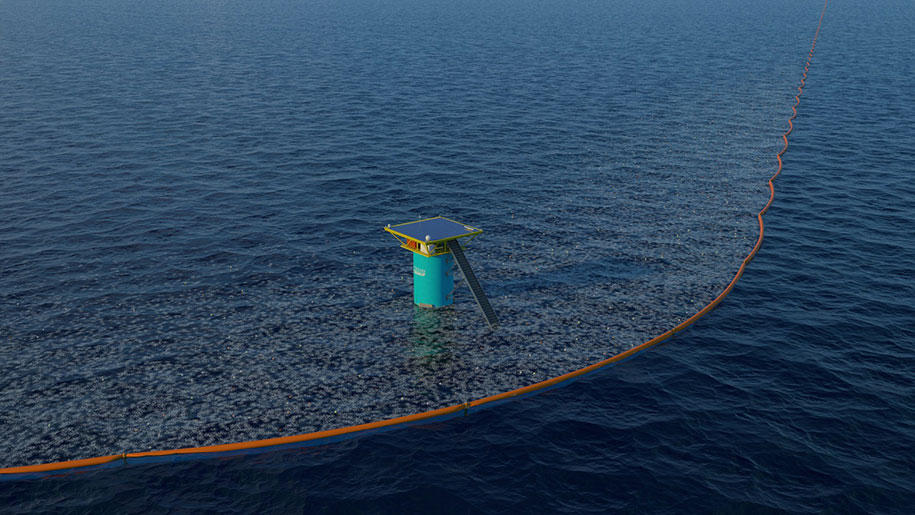
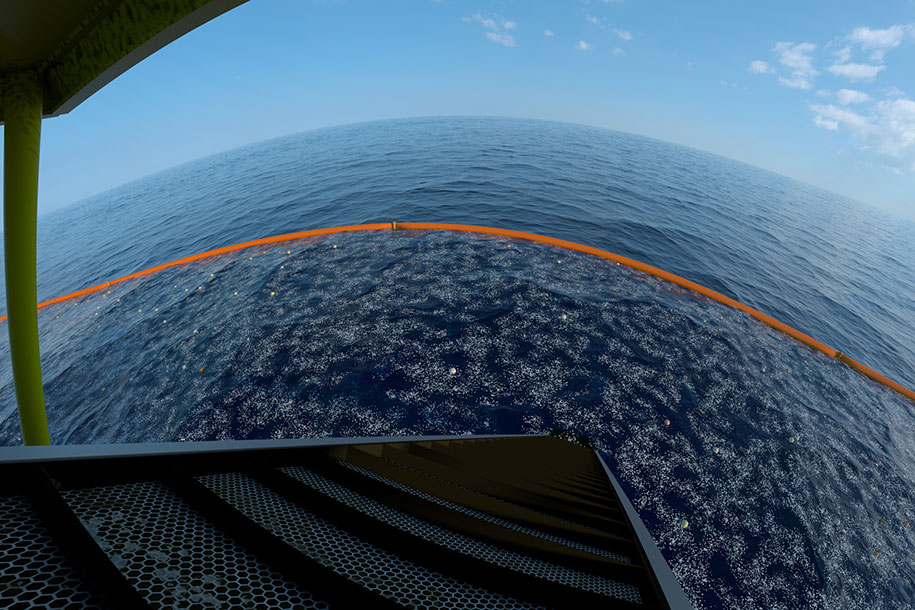
Boyan Slat is a 20 year old with an idea on how to clean plastic trash from our oceans. The Ocean Cleanup initiative wants to reduce the amount of trash in the oceans by employing floating barriers that are moored to the seabed. They would collect lighter-than-water plastic trash with the help of the ocean currents and without harming sea life.
The pilot, which will be deployed near Tsushima Island (located between Japan and Korea) in the first quarter of 2016, will test the durability and viability of the project. It will be only 2000 meters long, a far cry from the planned 100 kilometers length, but it will still be the longest floating structure on Earth.
Cleaning up plastic garbage in ocean, like the infamous Great Pacific Garbage Patch, is impractical with ships. However, the 100km stationary cleanup array could remove 42% of the Garbage Patch over 10 years, 70,320,000kg in total.
More info: theoceancleanup.com | Facebook | Twitter (h/t: boredpanda )
When it’s deployed in 2016, the 2,000m floating line will become the longest floating structure in the world.

This concept will test out 20-year-old Boyan Slat’s plan to rid the oceans of floating plastic waste.

This plan would use ocean currents to skim the plastic trash without harming the sea life.

The eventual Ocean Cleanup Array would be a 100km long and able to collect 70,320,000kg of plastic waste over 10 years

Estimated clean up cost would be roughly 4.53 euros (5.04 USD) per kilogram – 3% of the cost of other potential clean-up methods




Martynas Klimas
Writes like a mad dervish, rolls to dodge responsibility, might have bitten the Moon once.
