25 Times Building Inspectors Spotted The Most Horrifying Things During Structural Assessments (New Pics)
How many of you have been actually worried about the structural integrity of your homes, offices, shops, or hospitals? Unless there is a noticeable crack in the wall or sheets of drywall falling from the ceiling, we don’t really overthink it that much. In reality, the house’s foundation could be failing, and you would have no idea because sometimes it can be hard to spot. Therefore, it’s always better to be safe than sorry. Maintaining the foundation of your house can save you time, money, and, most importantly, your safety. It can cost thousands of dollars to fix when it’s too late, and severe crumbling is done.
However, there are professionals whose jobs are to provide structural checks of the buildings. And things they uncover during these assessments might seriously surprise you and make you wonder how some of these buildings are still standing. The building inspectors from Alpha Structural, Inc. share the most shocking and hazardous constructions they found while on the job. Scroll down to see some of their photos, and try not to judge the people who came up with some of these “art installations.”
More info: AlphaStructural.com , Facebook , Instagram , Twitter , Imgur
#1

The soil eroded and left a massive gap in the hill as it all came sliding down. All the extra weight causes the wall to get to a point that it is not strong enough to support the soil, it becomes overloaded, and fails. A drainage system behind a wall like this could’ve potentially helped. A drainage system can include a layer of gravel, drainpipes and weep holes that redirect the water that would usually sit behind the wall. Retaining walls typically are not designed to resist the weight of soil and water. So, when hydrostatic pressure builds up behind a wall, it can become overloaded and fail. The wall caused damage inside the home too. This could’ve been much worse.
#2

This home’s retaining wall failed during the heavy rainfall Los Angeles experienced a couple of weeks ago. A common reason why retaining walls fail is saturated soils, usually from rain, with a lack of a proper drainage system behind the wall.
#3

The pig from the three little pigs story did a better job at building a house of bricks. This looks rushed. Maybe the big bad wolf was closer than they thought.
#4

This apartment complex’s tucked-under garage has begun to spall. Spalling can cause serious injuries as it can damage the whole structure to a point of failure.
There are three stories above this garage.
#5

Rebar, which is steel reinforcement, makes a wall stronger and reduces cracking and leaning. Older block walls may not have rebar in them and are more apt to crack or fail.
The majority of maintenance and repairs on a block or concrete wall can be done by masonry or concrete wall contractors. In extreme circumstances, a geotechnical and/or structural engineer may be needed. I know it’s hard but take your eyes off the wall and look up to the balcony… Yeah, that’s not supposed to happen either.
#6

Trees and plants need to be carefully chosen when this close to a wall. Usually, you would want to keep trees at least 15ft. away. Most of a tree’s growth happens out of sight, and those roots can do real damage.
#7

We did this assessment for a brand-new home in Los Angeles built in 2017. This is a 3.2-million-dollar home. When we went into the crawlspace, we noticed these wood pieces in odd places. We’ve seen a thing or two, so we knew we had to cut these off and inspect behind it. When we removed the wood pieces, we immediately knew why they were trying to hide what was behind it. Sloppy concrete work. We found several exposed spots. Leaving components of the home open to the elements can cause problems like this rusted beam. This beam is holding up three stories.
#8

Only bounce houses should move side to side. This home’s garage is clearly on its way out. Hope it’s empty.
#9

Structural support shouldn’t be a balancing game.
#10

I love magic shows.
This house impressed me with floating posts and invisible piers.
#11

This internal cripple wall is leaning to one side. I guess it’s already doing half the work for the next earthquake.
#12

The “Balcony Bill” was signed back in 2018, and for good reason. Let’s get them up to code now.
#13

This internal stem wall is leaning significantly to one side. This is compromising the structural integrity of the home as other sections now carry more weight than intended.
#14

When a deck is showing signs of wear and tear, you should look for any rusting of metal components. This isn’t only an appearance issue but, also a safety warning. The structural components of the deck could be unsafe and could cause a total collapse of the deck floor. Steel nails that are used in deck construction are coated with a layer of zinc that protects the steel from airborne ocean water salts. Over time the zinc layer is worn down by the corrosion process. Once the zinc layer is gone, bare steel is exposed to sea salts that rapidly destroy the structural strength of the nail connections, making deck components dangerous for occupant use.
#15

Load-bearing spider webs keep this post and pier in working order.
#16

Oh look: it moves. It shouldn’t need to be said, but no part of your home’s foundation should move with a push.
#17

Wood rot at its best… or worst.
#18

This post and pier looks funny. Someone replaced the post with a game of jenga.
#19
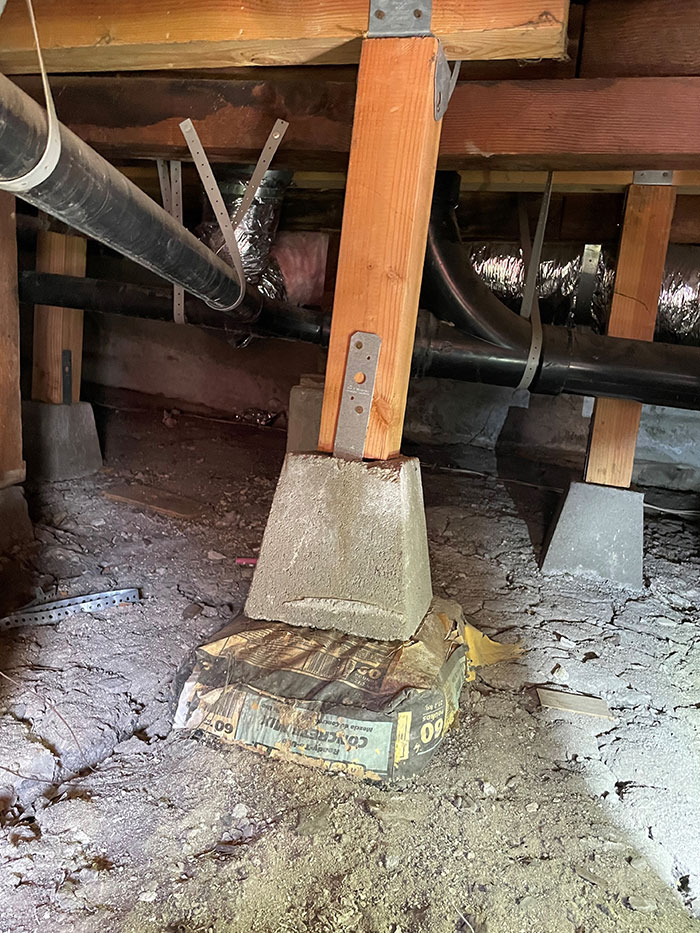
They did not understand the assignment.
#20

Here we have some pretty serious spalling in a residential garage. Spalling is a term used to describe areas of concrete which have cracked and delaminated from the substrate. Concerning structural damage, it doesn’t happen overnight but persistent water leaks and failure deferred maintenance could cause significant structural issues.
#21

Stick a knife in it. It’s done and needs to be replaced.
#22
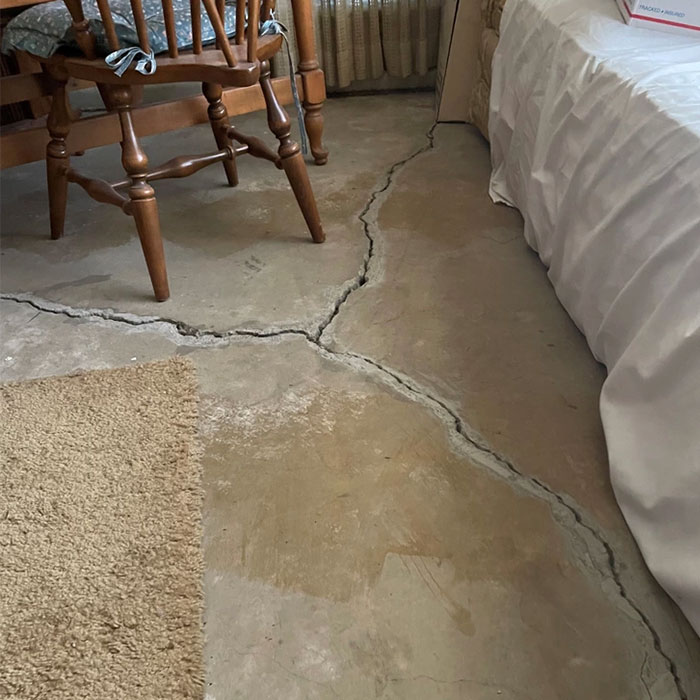
Signs of slab damage are important to assess and handle as soon as possible.
#23

This bolt has rusted and allowed the foundation wall to begin to spall. Horizontal foundation cracks are the most concerning. As you can see, the crack has been patched before, but this is something that needs to be replaced ASAP.
#24

The picture does not do the wall justice. This retaining wall is massive, and it is also failing. Yes, it has been braced. No, it doesn’t make it less scary.
#25

One of our Senior Structural Assessors, Kyle, can be seen here inspecting a failing retaining wall.


Violeta Lyskoit
Violeta is one free soul. She feels the most alive when traveling to new places and seeing the beautiful world out there.

3D-Printed City Shells For Hermit Crabs by Aki Inomata
Japanese artist Aki Inomata combines architecture, cutting-edge 3D printing technology and hermit crabs together in one brilliant project, titled “Why Not Hand Over a “Shelter” to Hermit Crabs?” Inspired by the urban landscapes of the biggest cities in the world, Inomata used 3D printing to create elegant shells for the little hermit crabs, which change their shelters as soon as they grow out of their old ones. As they often borrow shells cast off by other species (like sea snails), Inomata decided to hand them beautiful new specially-made shelters instead.
The artist came up with this unique idea when she found out about a similar bit of behavior among humans; the location of the former French Embassy in Japan, which had been French land, became Japanese from October 2009 for the following fifty years, after which it will be returned to France. “ The same piece of land is peacefully transferred from one country to the other, ” writes Inomata. “ These kinds of things take place without our being aware of it. “
Be sure to click on the videos below, which will show not only the process of hermit crab shell 3D printing, but also the surreal spectacle of the crabs receiving their gifts.
More info: aki-inomata.com (h/t: spoon-tamago )
New York City

Windmill landscape

Thailand

Santorini, Greece

Port City

Greece

Why Not Hand Over a “Shelter” to Hermit Crabs?
Process: